ESST

LICENSE IN SCIENCE AND TECHNOLOGY

Within the LMD (Bachelor's, Master's, Doctorate) system, electronics and telecommunications belong to the electrical engineering family, which falls under the ST (Science and Technology) domain. ESST offers two LMD Bachelor's degrees: Electronics and Telecommunications.

ELECTRONIC LICENSE

This Bachelor's degree in Electronics is a springboard to a very wide range of electronics professions (automotive, embedded systems, radio, television, telephony, medicine, robotics, imaging, industrial computing, etc.).

TELECOMMUNICATIONS LICENSE

The Telecommunications license is designed to cope with the rapid evolution in the development of new telecommunications products which requires users to master the know-how.

General organization of the training

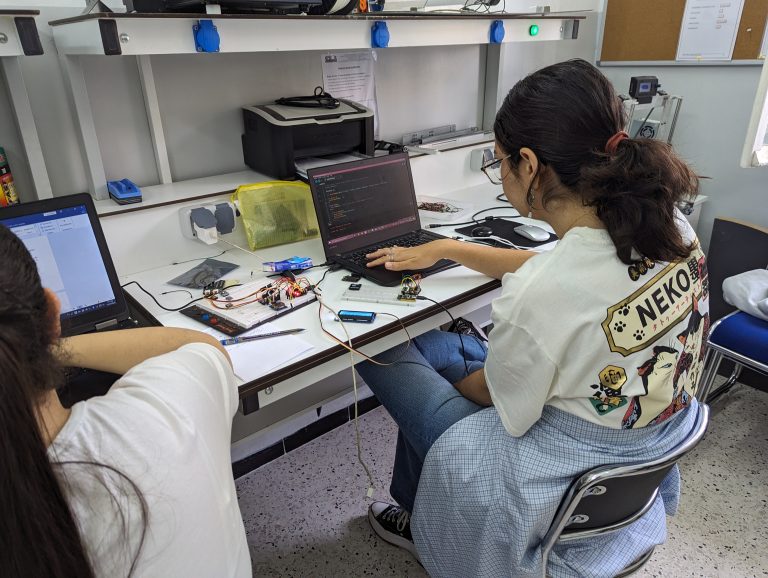
The training provided in this bachelor's degree program is academic in nature. It is organized into semester-based teaching units over three years of study. Through a structured and coherent teaching approach, students are guided towards a progressive acquisition of theoretical and practical knowledge in the field of technological sciences in general, and electronics and telecommunications sciences in particular.
First year – L1
Second year – L2
Third year – L3: Specialization and company internship

Sectors of activity and career opportunities

ELECTRONIC PATHWAY
Training in this field therefore offers numerous career opportunities in a wide variety of industries (space exploration, automotive, radio, television, telecommunications, medicine, robotics, imaging, industrial computing, embedded systems, etc.). It opens doors to all sectors of electrical engineering, which has become the leading field for career opportunities today.

TELECOMMUNICATIONS PATHWAY
Opportunities exist across all sectors. In telecommunications, with equipment manufacturers, operators, and companies that use or deploy mobile networks and services, as a technical sales manager, or as a telecommunications infrastructure maintenance manager… Creation of companies in collaboration with telecommunications engineers, innovating both in technological development and in the promotion of new uses.

For both programs, there is the possibility of continuing studies at the Master's and Doctoral levels.